Pattern Unveils Pi at Accelerate 26, Expands AI Push with New eCommerce Execution Engine
At Accelerate 26, Pattern launched Pi, an AI-powered ecommerce execution engine built on 77 trillion data points, while executives Dave Wright and John LeBaron outlined bets on automation, social commerce, AI discovery, and brand growth.
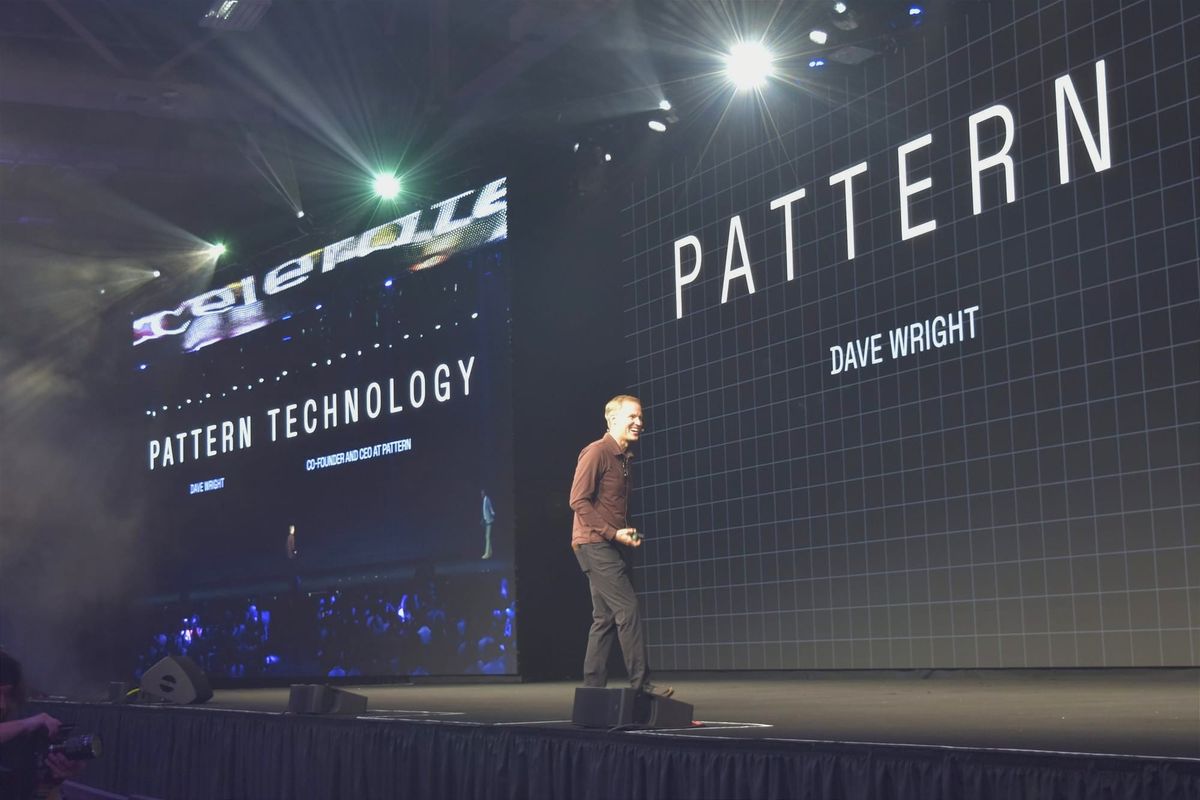
Dave Wright addresses the Accelerate 26 audience as Pattern introduces Pi and expands its push into AI-powered ecommerce execution.
Dave Wright addresses the Accelerate 26 audience as Pattern introduces Pi and expands its push into AI-powered ecommerce execution.
Salt Lake City, Utah — May 21, 2026
Pattern used the opening day of its Accelerate 26 summit to introduce what it described as the next major layer of its ecommerce platform: Pattern Intelligence, or Pi, an AI-powered execution engine designed not just to surface insights for brands, but to act on them in real time.
The launch, announced by Pattern co-founder and CEO Dave Wright, was the centerpiece of the company’s main-stage presentation at its annual gathering of ecommerce executives and brand leaders. But the broader message from Wright and Chief Revenue Officer John LeBaron went beyond a single product release. Pattern is betting that in a market increasingly shaped by marketplace complexity, social commerce, and AI-driven product discovery, brands need more than reporting dashboards. They need a system that can monitor, decide, and execute continuously.
“Pi is our central execution engine. It doesn't just surface insights, it acts on them,” Wright said in the company’s announcement. He said the system is built on more than 13 years of Pattern’s operational history, data collection, and automation logic, along with a technology portfolio that now includes 41 patents issued or pending.
Pattern CEO Dave Wright outlines the company’s AI strategy and unveils Pattern Intelligence at Accelerate 26 in the Salt Palace, Salt Lake City Photo courtesy Pattern
According to Pattern, Pi runs active sensors across core ecommerce functions including featured offers, advertising, content, pricing, and inventory. When a sensor detects an issue or opportunity, automated action loops can respond immediately. If the decision requires human judgment, Pi surfaces curated recommendations for brand approval instead of acting autonomously.
Pattern said Pi has already taken millions of automated actions across its brand portfolio, including featured offer recoveries, content fixes, and pricing changes. Each action is timestamped and recorded, giving brand partners a searchable log of work done on their behalf.
Pi is built on what Pattern says are now more than 77 trillion proprietary data points, with another 800 billion new points added each week.
On the Main Stage at Accelerate 26, Pattern CEO Dave Wright outlines the company’s AI strategy and unveils Pattern Intelligence, or Pi.
Pi’s launch reflects a larger Pattern thesis
While Pi was the headline announcement, the product was presented as part of a broader view of where ecommerce is going.
In his opening keynote, LeBaron argued that brands are now operating in a market where growth is no longer just about optimizing Amazon. Marketplaces remain dominant, he said, but product discovery is shifting rapidly across TikTok, social platforms, and AI interfaces, while fulfillment and advertising continue to get more expensive and more complex.
LeBaron said Pattern itself has grown from roughly $100 million in revenue when he joined eight years ago to guidance of more than $3 billion in 2026, largely by expanding existing brand relationships rather than simply signing thousands of logos. Pattern now sells across more than 70 marketplaces globally.
The underlying challenge for brands, he suggested, is that digital commerce is becoming more strategically important at the same time it remains under-resourced.
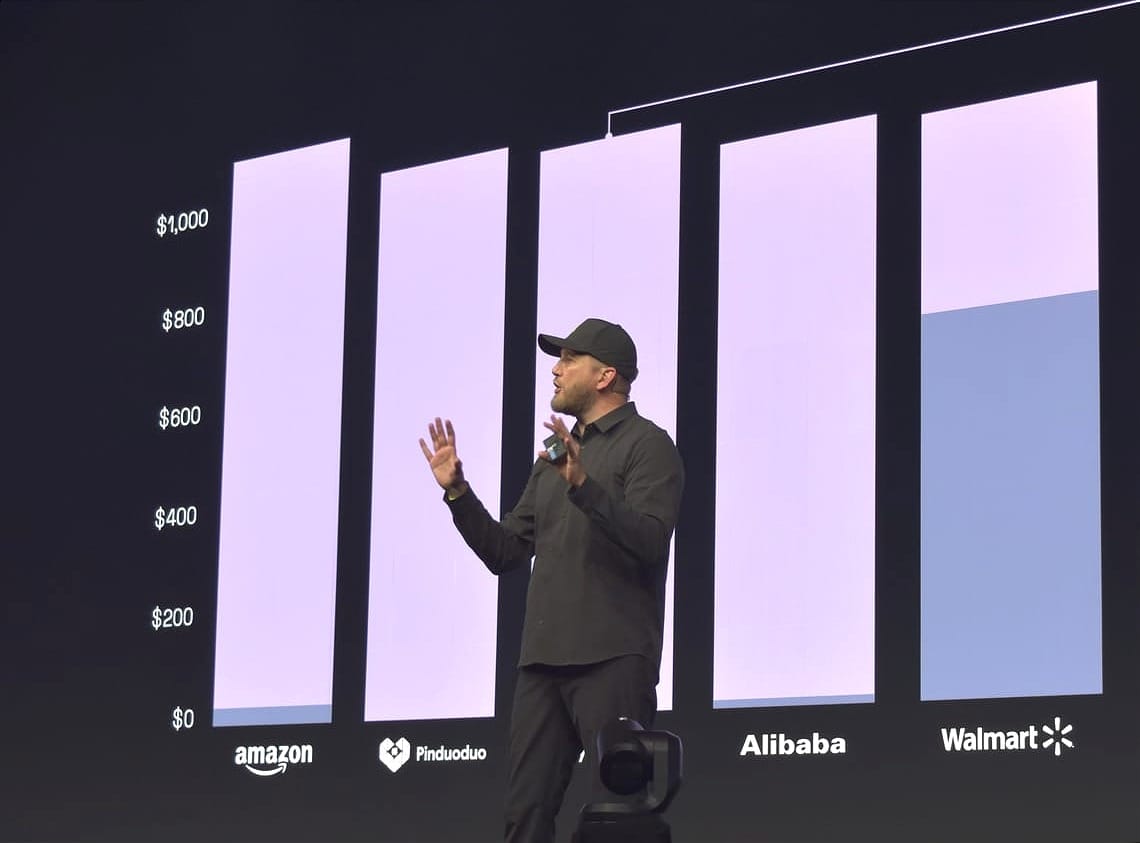
John LeBaron, chief revenue officer of Pattern, opens the Main Stage morning session at Accelerate 26 with a look at the forces reshaping ecommerce growth.
In an interview after the keynote, LeBaron described what he called an “executive dilemma” inside many consumer brands. Most profit still comes from traditional retail relationships, he said, while ecommerce is often a smaller, less profitable, and much more operationally intense part of the business.
“Most of your profit comes from retail customers, Costco, Walmart, Target, Best Buy, Nordstrom — whatever it is,” LeBaron said. “Move that over to digital. It’s 25% of my revenue … it’s a much more expensive channel.”
That imbalance often means ecommerce teams are surprisingly small. LeBaron said Pattern surveyed hundreds of North American brand leaders and found that 70% had fewer than 10 people dedicated to ecommerce, while 50% had teams of fewer than five.
At Accelerate 26, Pattern CRO John LeBaron outlines how brands are navigating rising marketplace complexity, TikTok-driven discovery, and AI-powered commerce.
“They are smart people, they’re capable, they’re talented,” he said. “They do not have 3,000 people like Pattern does to go help them.”
That framing helps explain Pattern’s pitch for Pi: not just another analytics interface, but a system designed to absorb complexity on behalf of lean brand teams.
New capabilities available now
Wright said Pi is available to brand partners today and includes several tools intended to make its intelligence more accessible inside everyday workflows.
Those include:
Daily Brief and Podcast, a written and audio summary of a brand’s rolling seven-day performance
Chat-to-Data, which provides on-demand answers to ecommerce questions backed by Pattern’s proprietary data
Pi Skills, prebuilt automations for ecommerce workflows
A Knowledge Management System, where brands can upload their own rules, tone, and preferences
GEO and Alexa for Shopping Scorecards, showing how products rank across AI shopping environments including Amazon’s Alexa for Shopping, Walmart Sparky, ChatGPT, and Google AI Mode
A Chrome extension that surfaces Pattern intelligence directly on Amazon product pages
Availability through the ChatGPT app directory, with additional platforms expected later
On stage, Wright described Pi as the culmination of years of effort to turn Pattern’s operating experience into a real-time execution layer that “meets teams where they work,” whether in a browser, in Slack, or inside AI tools.
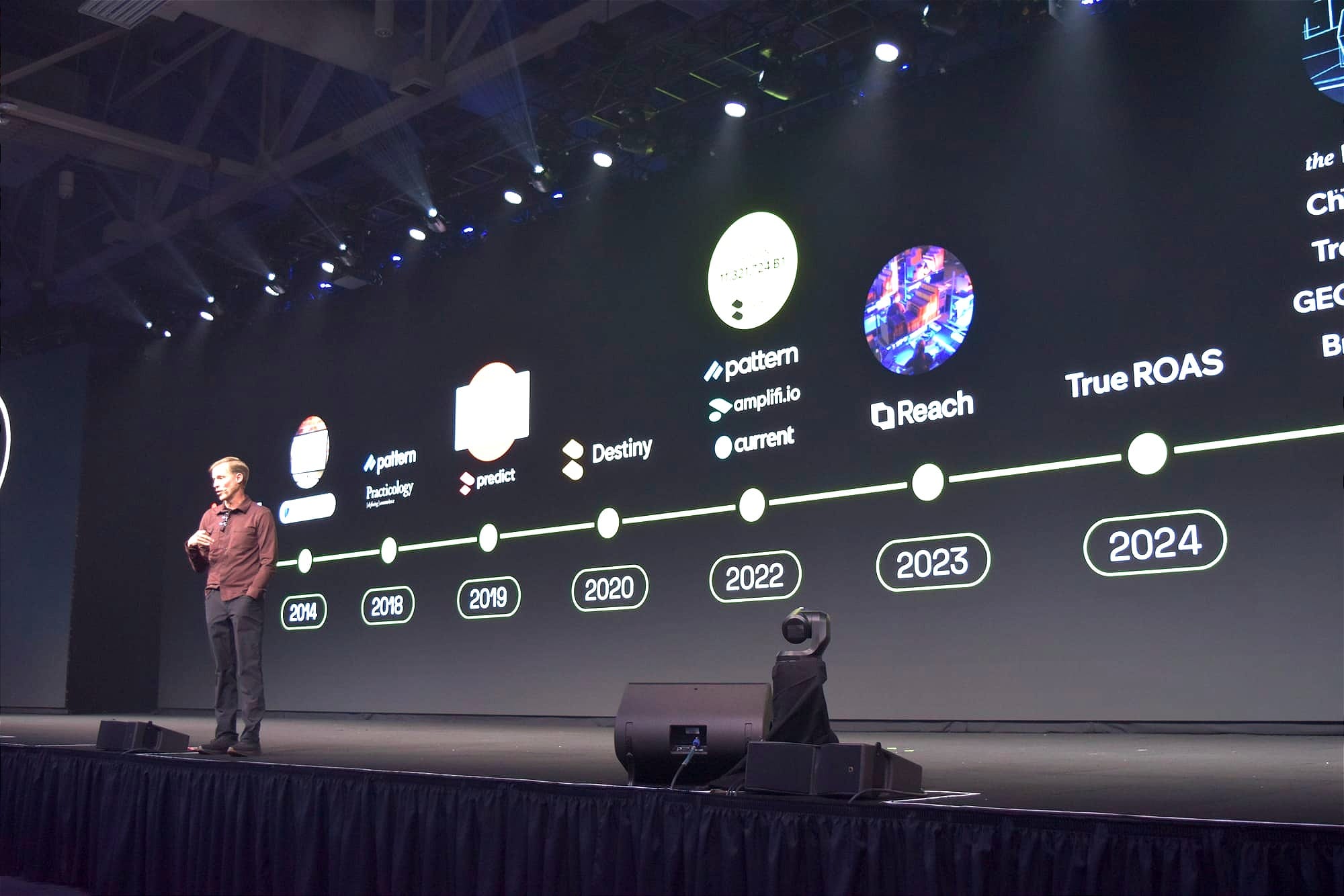
Dave Wright on stage at Accelerate 26 showing Pattern's major launch events over the years
Beyond Pi: Portal and a patented approach to “true ROAS”
Pattern also used the keynote to spotlight two other initiatives that help flesh out its AI and automation strategy.
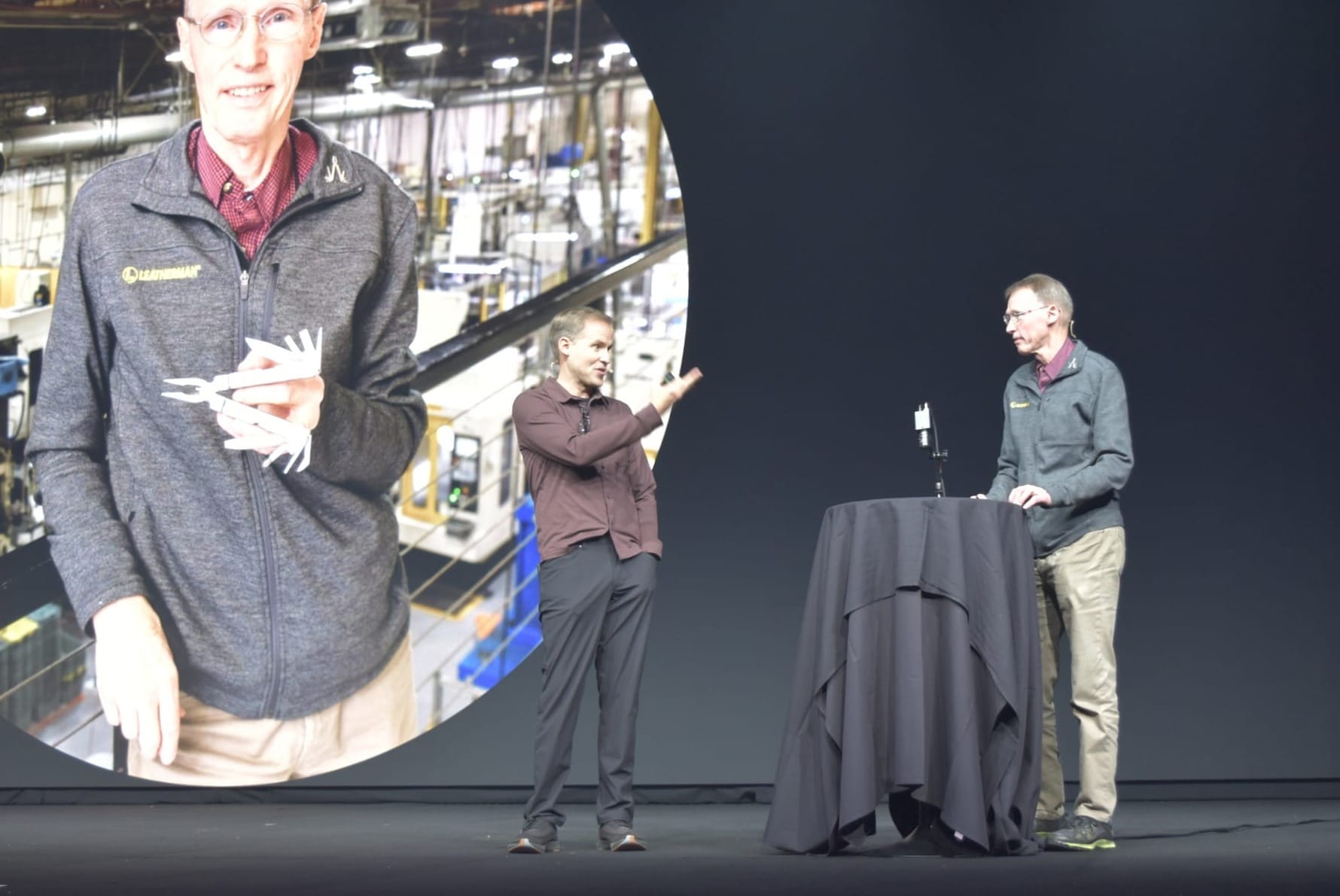
The first was Portal, a content-capture and AI imagery system that Wright demonstrated on stage using a signed Leatherman multitool. The idea, he said, is to solve a common problem in AI-generated product content: if brands do not have enough clean reference data, outputs degrade quickly, especially around logos, reflective surfaces, or high-detail visual elements. By capturing better source imagery, Pattern says Portal can help brands generate higher-quality product content at scale across large catalogs, languages, and marketplaces.
Dave Wright and Leatherman founder Tim Leatherman share the Main Stage at Accelerate 26 as Pattern showcases new AI content capabilities built around authentic product detail. Leatherman inscribed one of his iconic pocket tools with his signature as part of a giveaway at Accelerate 26.
The second was a newly awarded U.S. patent for what Pattern calls True ROAS®, short for True Return on Advertisement Sales Value. Pattern said it was granted United States Patent No. 12,626,273 B2 on May 12, 2026, covering systems and methods for measuring advertising effectiveness by accounting for both short-term and long-term factors rather than relying on standard marketplace attribution alone.
On stage, Wright described the company’s long-running frustration with conventional ad measurement, arguing that standard ROAS often gives brands an incomplete picture of what their advertising dollars actually generated. In Pattern’s view, the harder question is not simply which ads were credited with sales, but which ads created incremental sales that would not have happened otherwise.
Dave Wright on stage at Accelerate 26 discussing Pattern’s new true ROAS patent. Photo courtesy Pattern
In a statement released alongside the announcement, Pattern Chief Architect Jason Wells called the system “the truest measure of incrementality in advertising,” saying the goal is to tell brands more accurately what each dollar of spend returned. According to Pattern, the patented model combines experimental and non-experimental data, continuously updates as new information becomes available, and weighs factors such as organic market conditions and competitive dynamics to generate product-specific estimates of advertising impact.
The company says True ROAS works in tandem with Destiny, Pattern’s patented adtech system for identifying winnable keywords, automating bids, and helping products move into stronger organic positions in marketplace search results. The broader idea is a flywheel: better measurement informs better spending decisions, and better spending improves the odds of durable organic ranking rather than short-term paid performance alone.
That theme echoed through both keynote presentations. LeBaron spoke at length about the growing cost of advertising and the need to distinguish between rented growth and durable growth, while also arguing that social platforms such as TikTok are influencing purchase behavior well beyond what last-click metrics can capture. Together, the Pi launch and the True ROAS patent underscored Pattern’s larger pitch: in a more complex ecommerce environment, brands need both faster execution and more credible measurement.
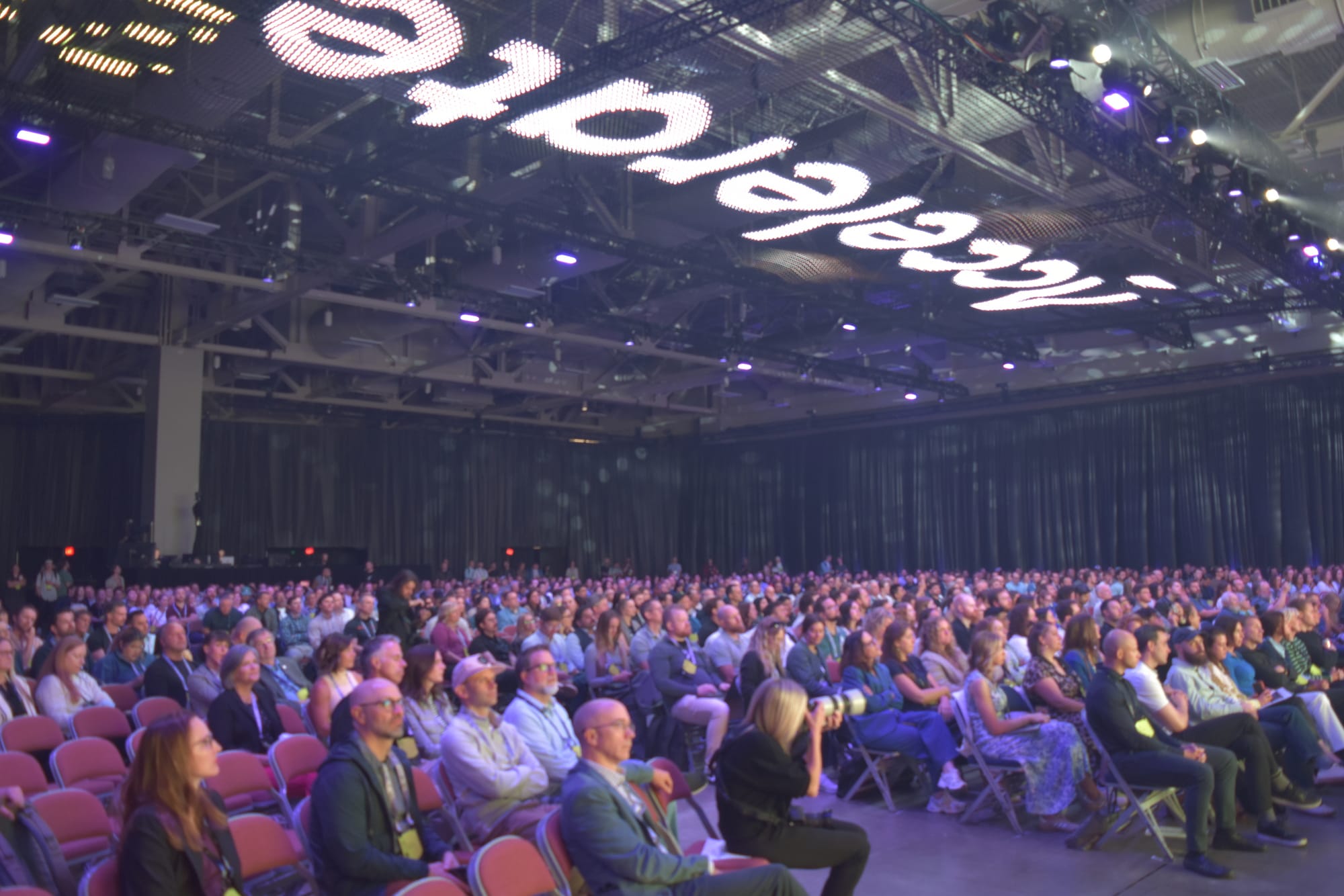
Attendees gather for the Main Stage morning session at Pattern’s Accelerate 26 summit, where executives outlined the company’s latest AI, marketplace, and ecommerce initiatives.
What brands should do next
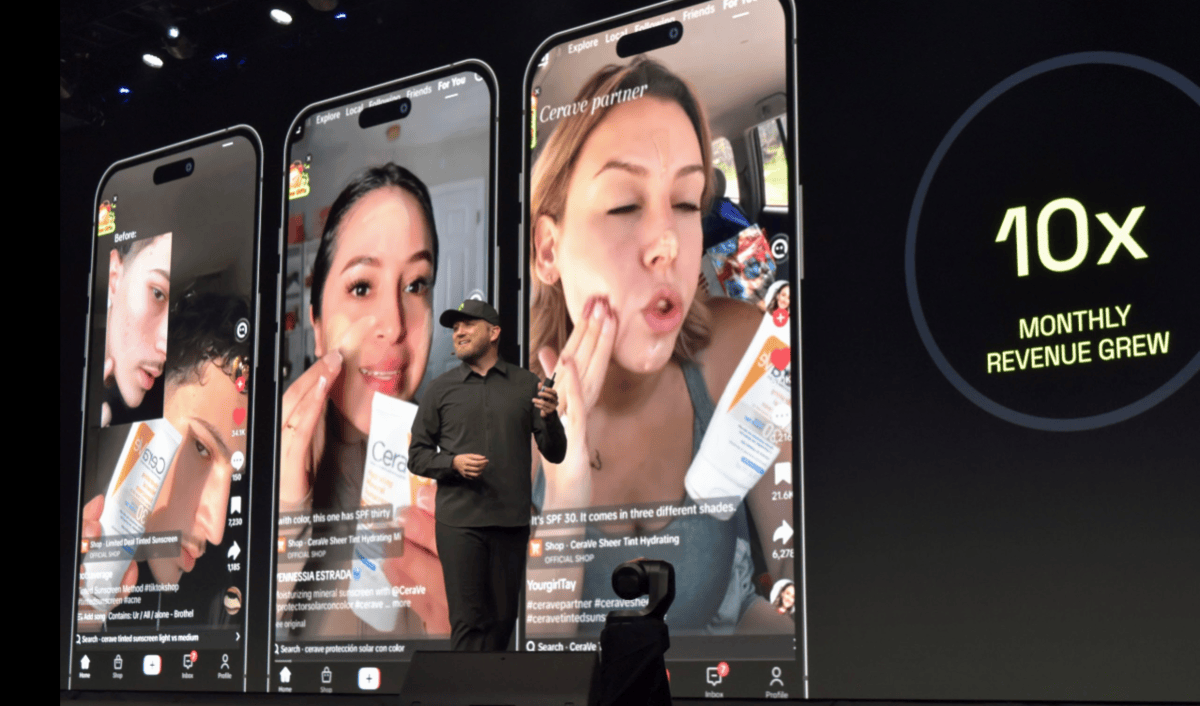
LeBaron also spent part of his morning presentation talking about TikTok’s “halo effect” across channels, while also acknowledging after the keynote that proving that effect mathematically remains difficult.
“What is not arguable is that you have hundreds of millions of people in the U.S. using this platform,” LeBaron said of social commerce. “They are increasing in a dramatic sense the amount of time they are spending on those platforms, therefore they are being influenced, whether we like it or not.”
Asked how brands should prioritize amid all the noise — marketplaces, AI, content, pricing, TikTok, fulfillment — LeBaron told TechBuzz the answer depends heavily on a brand’s maturity and category.
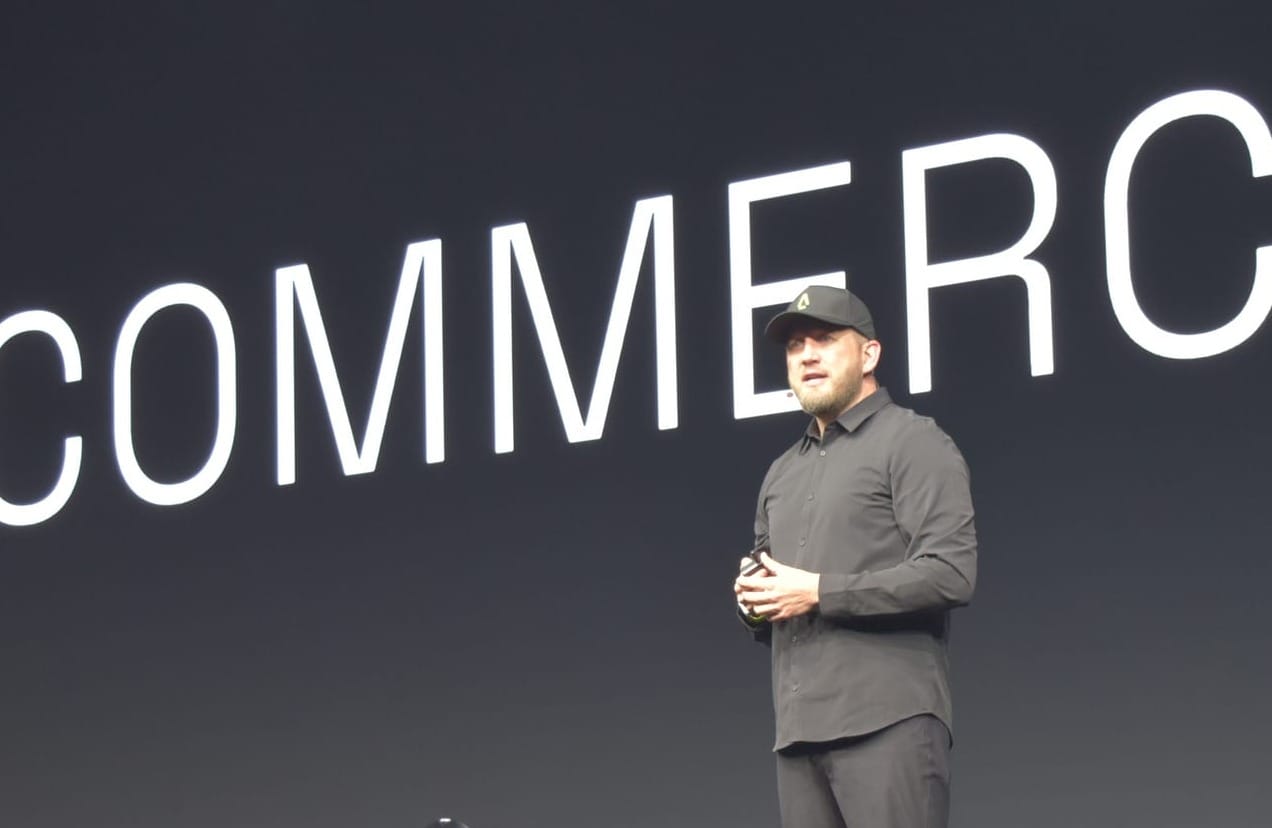
John LeBaron at Accelerate 26 mapping the shifts transforming ecommerce, from marketplaces and fulfillment to TikTok and agentic commerce.
“The short answer is, unfortunately, it just depends,” he said. “Where is your brand in the arc of its maturity? Where is your brand in the category, in its arc of maturity? Are you in soap? Are you in curtain rods? Are you in multi-tools?”
A new or novelty-driven brand may need awareness and engagement first, he said, while a mature or commoditized brand may need a different growth motion. Pattern’s role, in his telling, is to help brands break down that complexity into practical decisions.
He also framed the Pattern-brand relationship less as a miracle cure than as a performance partnership.
“I’m going to show you the way, and I’m going to help you run that Ironman … but a lot of it’s going to be on you,” LeBaron said. “It needs to be a true kind of partnership.”
That, he said, is also how Pattern thinks about durable value. Not every success is just about posting short-term revenue gains. In some cases, the real objective is entering a new region, improving new product launches, or solving a persistent operational problem. The key is aligning on the goal and then measuring whether that goal was actually achieved.
An AI launch rooted in old-fashioned operator culture
For all the futuristic language around autonomous execution, Pattern’s message at Accelerate 26 was grounded in a much older company instinct: brands need help doing hard operational work, and they need partners who can execute under pressure.
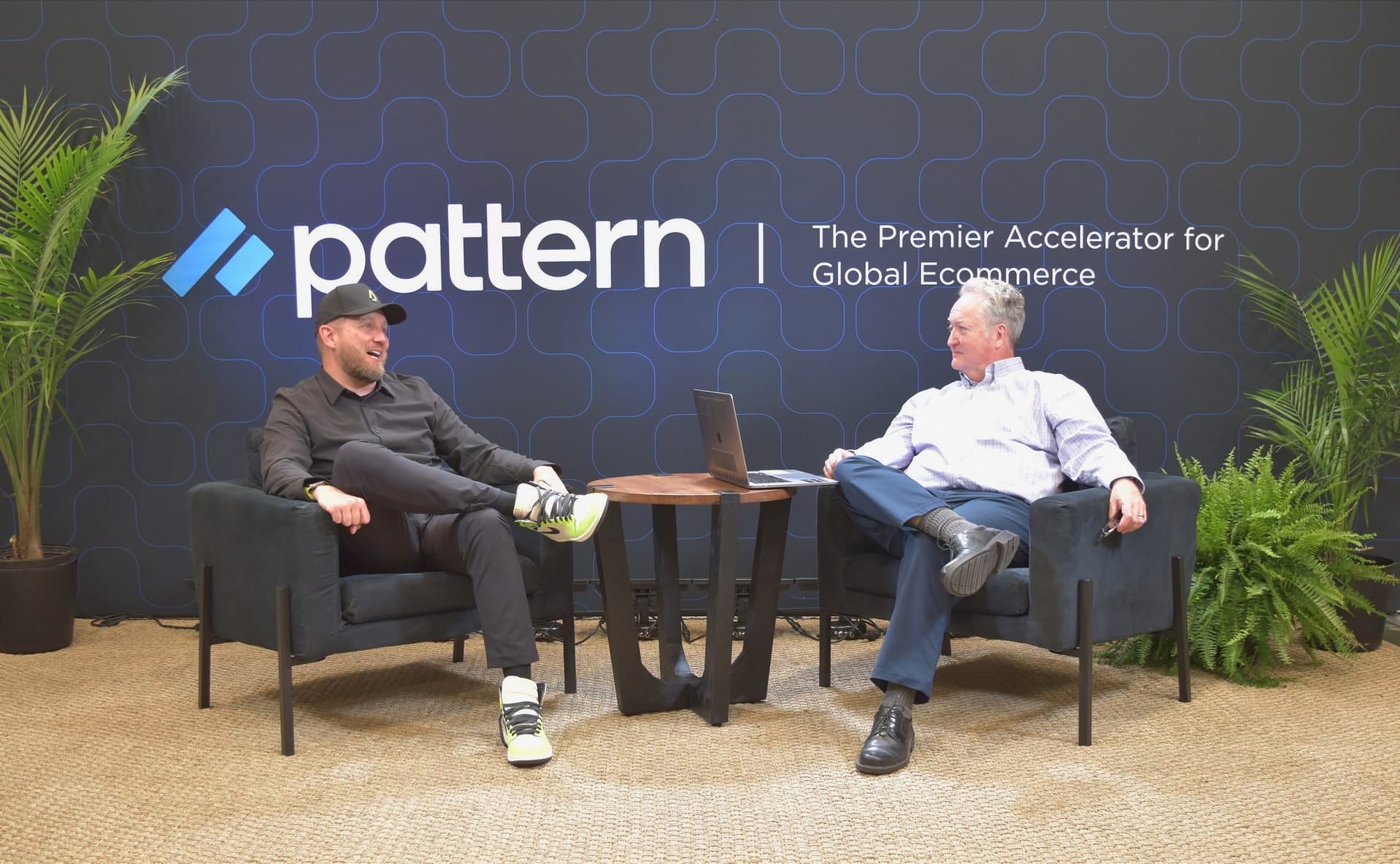
Interviewing Pattern CRO John LeBaron at Accelerate 26 after the company’s morning keynote on AI, ecommerce execution, and global marketplace growth.
In conversation after the keynote, LeBaron recalled an early Pattern fulfillment crisis in Hebron, Kentucky, when staff from across the company were pulled in to help protect customer commitments ahead of a critical seasonal window leading up to Black Friday. The story has become part of company lore, he said, because it captures something still central to the business: brand trust is won operationally, not just through software.
That history was visible in the way Pattern framed Pi. The company is not pitching AI as a replacement for brand judgment. It is pitching AI as a way to turn years of marketplace, advertising, pricing, content, and fulfillment experience into a system that can move faster than manual teams can on their own.
At Accelerate 26, Pattern’s clearest message was that ecommerce complexity is only increasing. Pi is the company’s latest attempt to make that complexity actionable.
Pi is now available to Pattern brand partners at pi.pattern.com. Prospective partners can learn more at pattern.com/pi.
Brand leaders and ecommerce professionals make their way into the Main Stage at the Salt Palace for Accelerate 26 Photo courtesy Pattern
Share this article
The link has been copied!
Your link has expired. Please request a new one.
Your link has expired. Please request a new one.
Your link has expired. Please request a new one.
Great! You've successfully signed up.
Great! You've successfully signed up.
Welcome back! You've successfully signed in.
Success! You now have access to additional content.